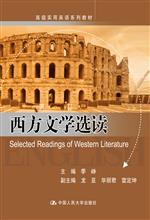
Part 1 Greek Mythology Zeus Hera Theseus Jason Part 2 The Bible Genesis 1–3 Genesis 4 Genesis 6-9 Genesis 11 Part 3 Poetry Sonnet 29 I Wandered Lonely as a Cloud O Captain! My Captain! There’s a Certain Slant of Light The Lake Isle of Innisfree The Road Not Taken· Digging Eating Alone Part 4 Prose The Republic: Book X (Excerpt) The Poetics (I–V) Of Travel·· The Declaration of Independence Nature Part 5 Drama Romeo and Juliet (Excerpt) Long Day’s Journey into Night (Excerpt) No Exit (Excerpt) The Dumb Waiter (Excerpt) Buried Child (Excerpt) Death of a Salesman (Excerpt) Part 6 Fiction American Fiction Young Goodman Brown (Excerpt) The Purloined Letter(Excerpt) The Awakening Martin Eden (Excerpt) British Fiction David Copperfield (Excerpt) Frankenstein (Excerpt) Heart of Darkness (Excerpt) The Mark on the Wall (Excerpt) Short Stories A Sunrise on the Veld The Garden Party (Excerpt) The Heart of a Broken Story Eveline Bibliography 后记
精彩片段:
Part 5
Drama
Definition of Drama
Drama is a genre of literature, in which the words are mainly dialogue. People talking is the
basic dramatic action. Wordless activity may interrupt the talk, but it is the context of dialogue
that gives significance to such activity.
Elements of Drama
“Drama” comes from a Greek word “dran,” meaning “thing done,” “action,” or “deed.”
Aristotle, first and still the single most important theorist of drama, called drama “imitated
human action.” Professor J. M. Manly saw three necessary elements in drama: (1) a story (2) told
in action (3) by actors who impersonate the characters of the story. Aristotle in his Poetics, listed
the six elements of drama in order of importance: plot, character, thought, diction, music, and
spectacle.
The Origins of Drama
There are three independent origins of drama. Drama began with pagan religious rites in
Greece. It evolved from certain religious ceremonies. It is generally believed that Greek tragedy
developed from certain Dionysian rites dealing with life and death, while Greek comedy arose
from the Dionysian rites which dealt with the theme of fertility. And medieval drama came out of
rites commemorating the birth and the resurrection of Christ.
Drama as Performance
Unlike poetry and fiction, drama is theater. What the dramatist writes is a performable script.
Theatre is always more than mere language. Language alone can be read, but true theatre can
become manifested only in performance. So a performance of drama is much more than just an
art of words. The thoughtful efforts of perhaps a hundred people—actors, director, producer, stage designer, costumer, makeup artist, and technicians, ect.—have to go into a production. Another
difference between fiction and drama is that dramatic effects are stage effects. Plays appeal
directly to the auditory and visionary senses. Characters exist directly before audiences in their
own immediate field of experience.
How to Effectively Read Drama
(1) Try to envisage the set clearly.
(2) Pay attention to the introduction of characters.
(3) Pay attention to the stage directions.
(4) Pay attention to whatever sound effects are specified in the play.
(5) Pay attention to the eloquent silences, including pauses within speeches or between
speeches.
(6) Pay attention to the revealing remark or gesture of the characters.
A Selection of Plays:

 中国大学出版社协会 |
首页 |
宏观指导 |
出版社天地 |
图书代办站 |
教材图书信息 |
教材图书评论 |
在线订购 |
教材征订
中国大学出版社协会 |
首页 |
宏观指导 |
出版社天地 |
图书代办站 |
教材图书信息 |
教材图书评论 |
在线订购 |
教材征订