|
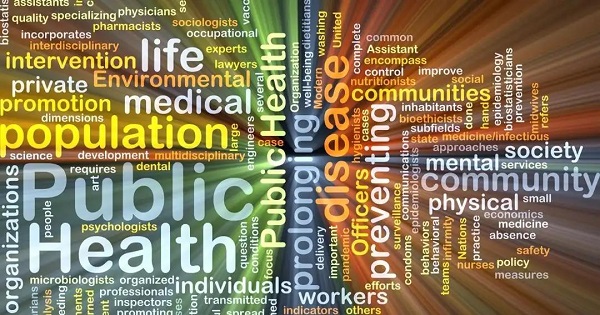
Public health is the science and art of disease prevention. It targets many facets necessary to the wellbeing of society, including prolonging life, the promotion of physical health through organized community efforts directed at environmental sanitation, the control of community infections, the education of the individual in the principles of personal hygiene, the development of the social machinery to ensure that every individual in the community has an adequate standard of living for the maintenance of health, and the organization of medical and nursing services to aid early diagnosis and enable preventive treatment of diseases.
公共卫生是通过有组织的社区努力来预防疾病、延长寿命和促进健康和效益的科学和艺术。这些有组织的社区努力包括改善环境卫生,控制传染病,教育每个人注意个人卫生,组织医护人员为疾病的早期诊断和预防性治疗提供服务,建立社会机构来确保社区中的每个人都能达到适于保持健康的生活标准。组织这些效益的目的是使每个公民都能实现其与生俱有的健康和长寿权利。

Public health includes many sub-branches, among which the most important are preventive medicine, medical statistics, epidemiology, and health services. Preventive medicine is an important part of medical science, which, when integrated with basic medicine and clinical medicine, forms the entire frame of modern medicine. Because preventive medicine, medical statistics, and epidemics are three important compulsory subjects for international students majoring in clinical medicine, Zhejiang University Press organized public health experts from five universities in China and the University of Texas in the United States of America to compile an English textbook entitled Preventive Medicine, Medical Statistics and Epidemiology, which was published in 2014. In recent years, this textbook has played an important role in teaching preventive medicine, medical statistics and epidemiology to international students majoring in clinical medicine in China.
公共卫生有许多分支,其中最重要的就是预防医学、医学统计学、流行病学和卫生服务。预防医学是医学科学的重要内容,它整合了基础医学和临床医学,形成了现代医学的整体框架。预防医学、医学统计学和流行病学是临床医学专业的留学生必修的三大科目,为此,浙江大学出版社组织了国内五大高校以及美国德克萨斯大学的公共卫生专家合力编撰了全英文教材《预防医学、医学统计学和流行病学》,并于2014年出版。近年来,该教材为国内留学生在预防医学、医学统计学和流行病学课程的教学中发挥了重要的作用。
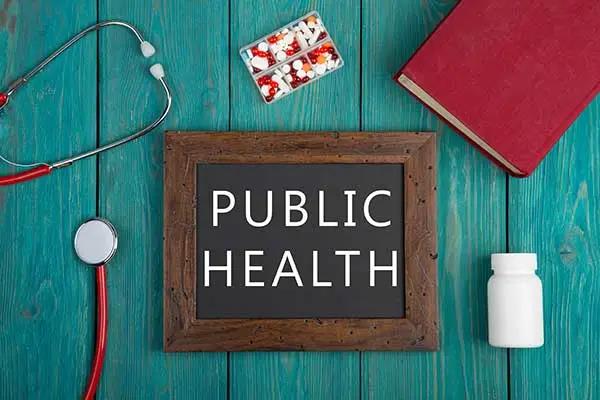
With the continuous expansi on and internationalization of higher education in China and the many developments in preventive medicine, medical statistics and epidemiology, a revised edition of this important textbook was required. In 2018, Zhejiang University Press organized experts to reprint Preventive Medicine, Medical Statistics and Epidemiology, based on the first edition. For the revised edition, the quality of standards was raised significantly to meet global demands. The authors endeavored to improve the quality of this textbook and reflect the latest developments in the fields of preventive medicine, medical statistics and epidemiology. In addition, the authors present a resource to standardize and unify the quality of teaching and materials for international students majoring in clinical medicine in China. 随着国内高等教育的发展和国际化进程的加深加快,预防医学、医学统计学和流行病学也得到了不断发展,对教材的修订需求日益凸显。2018年,浙江大学出版社组织专家在《预防医学、医学统计学和流行病学》第1版的基础上进行修订。此次修订致力于全面提升教材质量,反映预防医学、医学统计学和流行病学领域的最新发展,力图实现国内临床医学专业留学生教学与教材的标准化和统一化。

The new edition is a series of textbooks for public health including Preventive Medicine, Medical Statistics, and Epidemiology.
此次新修订的公共卫生系列教材包括《预防医学》《医学统计学》《流行病学》三本。
Courseware presented in MS PowerPoint and a question bank are available to supplement these books.
本系列教材每本书都有PPT课件和习题。
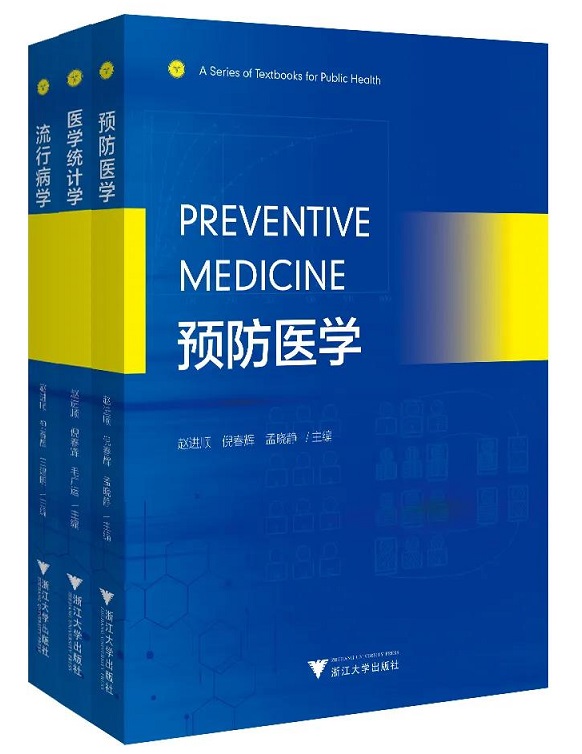
1
ISBN:978-7-308-20295-4
EDITORS-IN-CHIEF:ZHAO Jinshun, NI Chunhui & MENG Xiaojing
PRICE:75.00 RMB
PUBLISHED:JULY 2020
ABOUT THE BOOK:This book consists of six matchchapters. The first chapter introduces the concept of preventive medicine and its tasks, health determinants, disease prevention strategies and clinical and community prevention services. Chapter 2 introduces the relationship between environment and health, the source, classification, environmental fate of pollutants, the impact of the environment on health, and the toxicology of chemical pollutants. Chapter 3 describes the living environment and health, including air, water, soil environment, and health, focusing on the sources of pollutants in the environment, health hazards and control measures. Chapter 4 is about occupational health. It introduces the classification of occupational harmfulmatch factors and the types of health damage; the principles of diagnosis, treatment, and prevention of occupational diseases; the exposure risk of common occupational toxicants, dust and physical factors; the resulting health damage; and relevant preventative and control measures. Chapter 5 is about food nutrition and health, focusing on the basics of nutrients, life cycle nutrition, public nutrition, nutrition and diseases, and foodborne diseases. Chapter 6 introduces the social, psychological, and behavioral factors associated with health. Social factors focus on the role of economic, cultural and health services on health, and psychological factors focus on the impact of stress on health and related interventions. Compared with the previous edition, this new edition is more comprehensive and is easier for learners to understand the relationship between environment and health, which is conducive to the prevention and control of environmentally related diseases.
Preventive Medicine《预防医学》
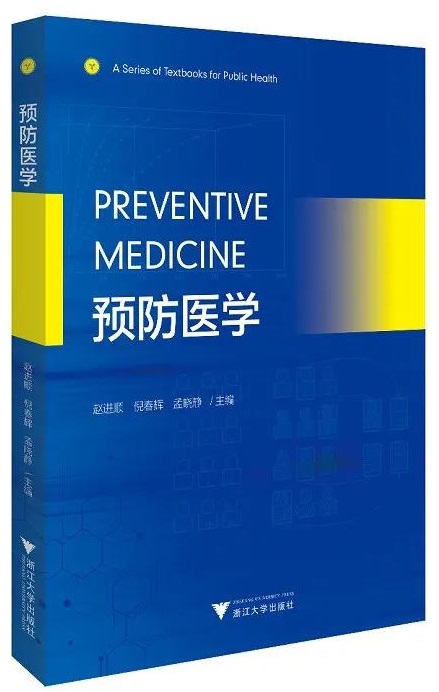
2
ISBN:978-7-308-20298-5
EDITORS-IN-CHIEF:ZHAO Jinshun, NI Chunhui & MAO Guangyun
PRICE:75.00 RMB
PUBLISHED:JULY 2020
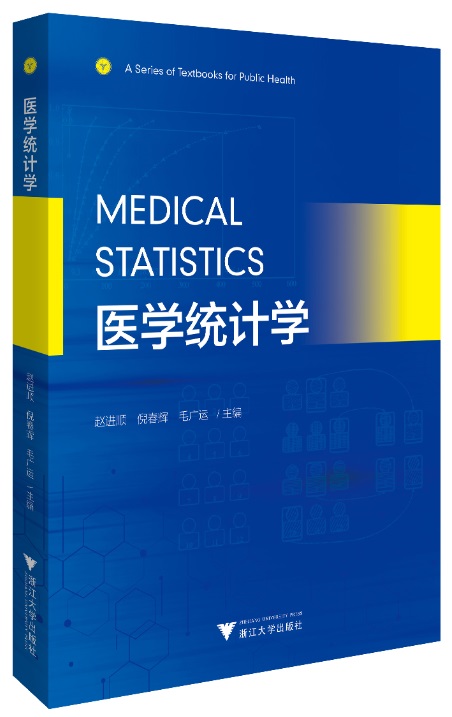
ABOUT THE BOOK:This book describes the basic concepts of medical statistics and the common methods used in practice including 17 chapters. Chapters 1, 2, and 3, introduce the basic statistical terminologies and descriptive statistics for quantitative data and categorical data. Chapter 4 introduces how to make statistical tables and graphs. Chapter 5 is about parameter estimation and introduces point and interval estimation, confidence interval and 95% confidence interval. Chapter 6 introduces the basic idea, key steps and the major considerations of a hypothesis test. Chapters 7, 8, 9 & 10 introduce the most commonly used hypothesis testing methods, including t-test, analysis of variance (ANOVA), chi-square test, and nonparametric tests. Chapter 11 is about linear correlation and regression; this chapter focuses on linear correlation analysis as well as the fitting and evaluation of a linear regression model. Chapter 12, 13 & 14 illustrate how to develop an appropriate model, specifically the multivariable linear regression model, multivariable logistic regression model, and multiple Cox proportional hazard model. Because the impact due to other potential confounders can be properly adjusted, compared to a simple linear regression model, the multiple Cox proportional hazard model is now widely accepted as a better approach to assessing the independent effect or influence of a predictor on a quantitative response variable or dichotomous response variables in a cross-sectional, case-control, or cohort study. Chapter 15 explains the foundations of the study design. Chapter 16 briefly introduces the principles and techniques of sample size and power estimates. Chapter 17 provides a basic introduction and guidance on the proper application of commonly used statistical methods by using SPSS software, which readers can follow to learn how to perform simple analyses. The goal of this book is to provide a basic introduction and guidance on the proper application of commonly used statistical methods, with sufficient background information and details that readers might carry out similar analyses themselves. This book provides a good starting point, both for students who want to systematically grasp the concepts of medical statistics and for researchers who want to increase their knowledge of medical statistics relating to their field.
Medical Statistics《医学统计学》
3
ISBN:978-7-308-20303-6
EDITORS-IN-CHIEF:ZHAO Jinshun, NI Chunhui & WANG Jianming
PRICE:49.00 RMB
PUBLISHED:JULY 2020
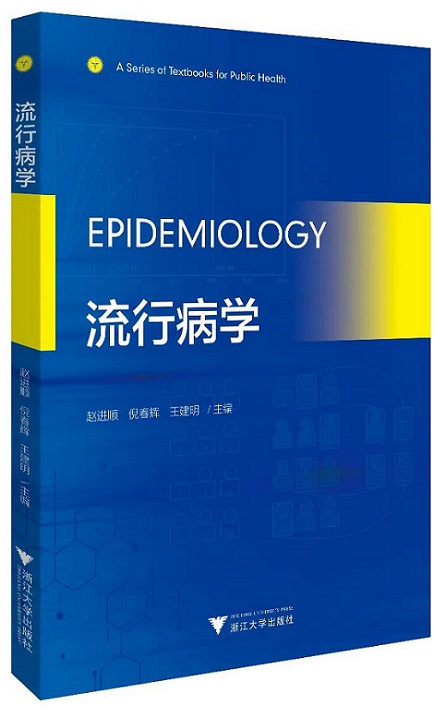
ABOUT THE BOOK:This book includes 13 chapters and describes the basic theory of epidemiology, commonly used research methods, disease prevention and control. Chapter 1 introduces the definition, history, and common research methods used in epidemiology, as well as the application and characteristics of epidemiology. Chapter 2 is about the distribution of diseases including measures of disease frequency, patterns of disease distribution, and the environmental intensity of diseases. Chapters 3, 4, and 5 systematically introduce three basic epidemiological research methods: descriptive study, cohort study, and case-control study, including the basic principles, designs, quality control, applications, methods of data analysis, strengths, and limitations of each method. Chapter 6 is about experimental studies and introduces the basic principle, design, implementation, and various biases that can exist in clinical trials, as well as the advantages, disadvantages, and possible ethical issues in an experimental study. Chapter 7 introduces the causal influence, including the causal models, information, and criteria. Chapter 8 is about the diagnostic test and includes the definition, design, and evaluation of a diagnostic test. This chapter also briefly discusses the differences between a diagnostic test and a screening test and compares the bias of these two tests. Chapter 9 is about communicable diseases and includes, etiology, the infectious process, and spectrum of communicable diseases. This chapter emphasizes the relationship between the epidemic process, prevention, and control of communicable diseases. Chapter 10 is about the various noncommunicable diseases (NCDs), and introduces the various epidemiological characteristics, prevention and control of NCDs. Chapter 11 introduces molecular epidemiology and includes the definition, research content, and methods of molecular epidemiology. Chapter 12 focuses on both systematic review and meta-analysis, and introduces the basic knowledge, essential steps, and reporting guidelines of systematic reviews. This chapter also discusses the basic concept and process of meta-analysis, and its advantages and disadvantages. Chapter 13 discusses the interpretation of epidemiologic literature and shows the reader the appropriate method to perform a literature search, review individual studies, and establish a causal relationship. Through the study of this book, the reader will learn how to use epidemiological methods to study the occurrence, development, and distribution of diseases in specific populations, and propose measures to control diseases and promote health.
Epidemiology《流行病学》
来源:微信公众号浙大教材服务
|

 中国大学出版社协会 |
首页 |
宏观指导 |
出版社天地 |
图书代办站 |
教材图书信息 |
教材图书评论 |
在线订购 |
教材征订
中国大学出版社协会 |
首页 |
宏观指导 |
出版社天地 |
图书代办站 |
教材图书信息 |
教材图书评论 |
在线订购 |
教材征订

